Russian Fishing 4
Places strong emphasis on individual components and how they work together. Building a setup often involves several separate choices, and small differences can matter.
Gear is at the heart of every fishing game, but each title treats it differently. This comparison explains how much attention each game asks you to give your tackle.
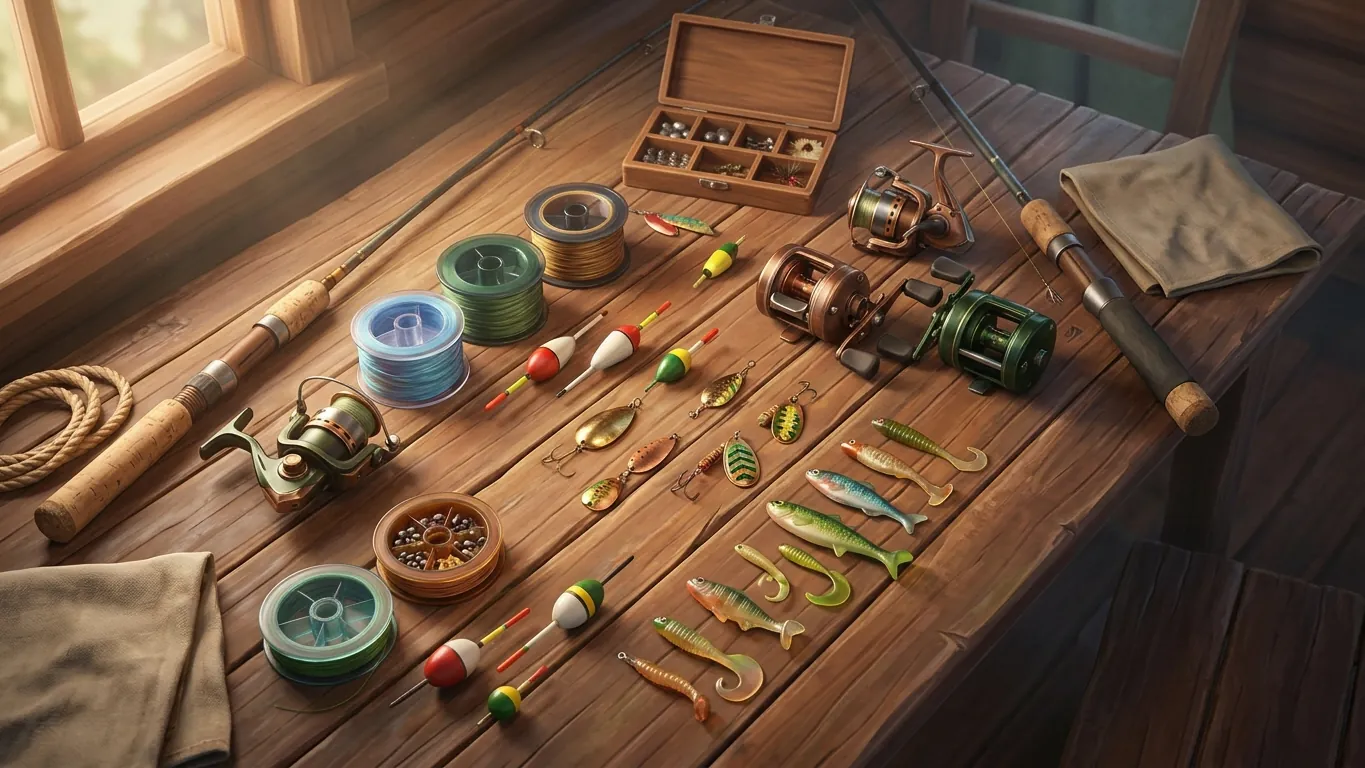
In a fishing game, tackle is more than decoration. It shapes how you cast, which fish you can target and how a fight with a fish plays out. Some players love this side of the hobby and want as much control as possible. Others prefer a simpler system so they can focus on the water and the scenery.
Understanding how deep each game goes with gear can save you from choosing a game that feels either too simple or too demanding. The comparison below is descriptive rather than evaluative: more detail is not better or worse, only different.
A short summary of each game's emphasis. Details may change with updates, so treat this as a general orientation.
Places strong emphasis on individual components and how they work together. Building a setup often involves several separate choices, and small differences can matter.
Offers a broad range of equipment and techniques that open up through progression. Gear choices are meaningful, with a structure that introduces them step by step.
Keeps gear understandable and approachable. Upgrades and bait choices matter, but the system is designed to be easy to pick up.
Treats gear as an important tool within a larger exploration experience. Choices matter, while the overall focus leans toward the world and its waters.
A useful way to think about tackle depth is the difference between choosing components and choosing complete setups. In games that emphasise components, you consider rod, reel, line, leader, hook and bait separately, and you learn how each affects the others. A strong rod with a weak line, for example, may still lose fish.
In games that lean toward complete setups, many of those relationships are simplified. You still pick sensible equipment, but the game spares you some of the fine-grained decisions. This makes it quicker to get fishing and easier to experiment without worrying about small mismatches.
Neither approach is more authentic in every respect. Component-heavy systems model more variables, while streamlined systems let you spend more time casting and enjoying the setting.
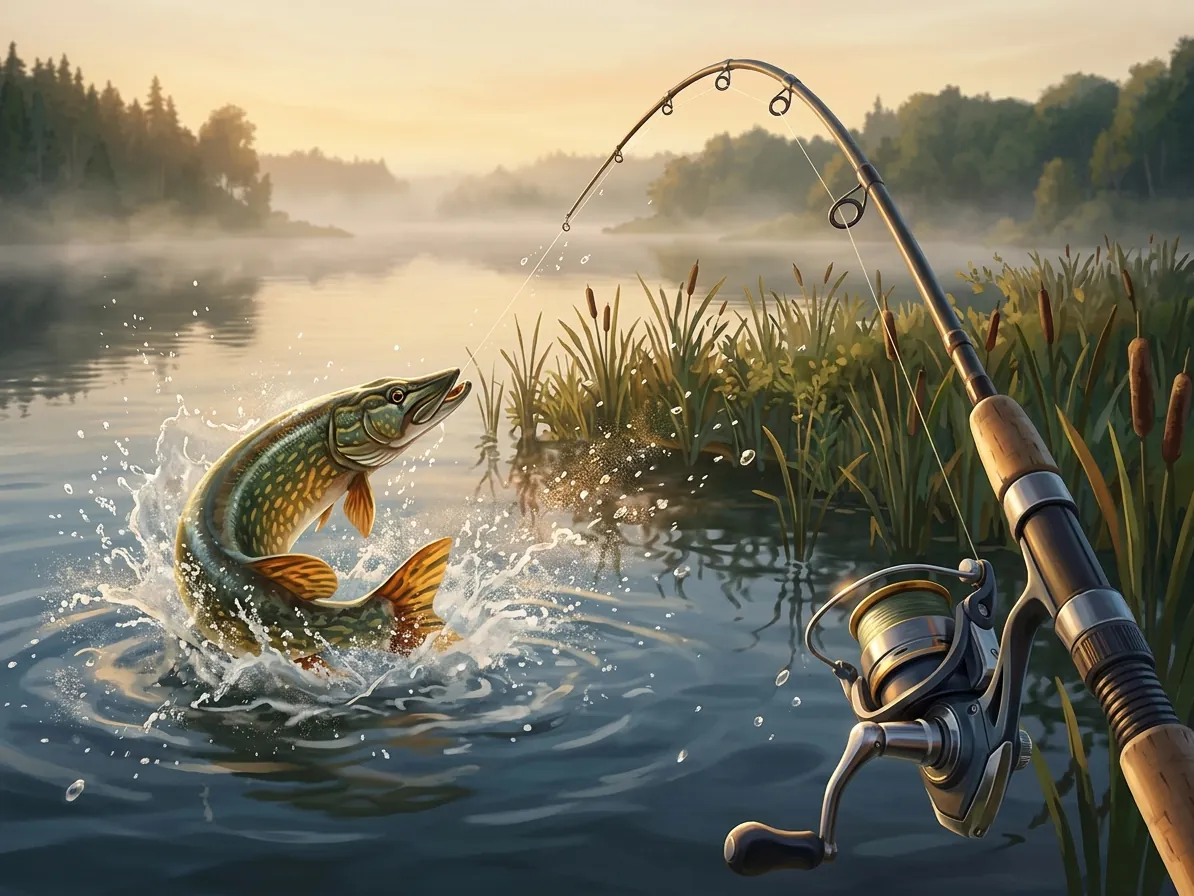
Beyond the basic setup, each game also varies in how many fishing styles it supports and how distinct they feel. Float fishing usually means watching for subtle movement, bottom fishing involves patience and attention to bite signals, and spinning asks you to work a lure with your retrieve.
Games with greater tackle depth tend to make these techniques feel more distinct and to reward matching bait and lure choice closely to the conditions. Games with a lighter approach still offer variety, but switching between styles is generally more forgiving.
If you enjoy researching gear and adjusting one element at a time, a component-focused game like Russian Fishing 4 or the progressively expanding systems of Fishing Planet may suit you. If you would rather pick sensible equipment and get to the water quickly, Ultimate Fishing Simulator or Call of the Wild: The Angler may feel more comfortable.
It is also perfectly reasonable to move between games. Many players start with a more approachable title, learn the general principles of fishing mechanics and later try a more detailed game once the ideas feel familiar. Whatever you choose, check each game's official information for current features before you decide.
 Fishing game mechanics explained in plain language
A plain guide to fishing game mechanics: casting, depth, bite signals, line tension and drag, useful in all four games covered on this blog.
Read more
 Why slow play suits fishing games so well
An opinion piece on enjoying fishing games at a calm pace, with ideas for relaxed sessions in Fishing Planet, Russian Fishing 4 and others.
Read more
 How to choose a fishing game that fits the way you play
Match Fishing Planet, Russian Fishing 4, Ultimate Fishing Simulator or The Angler to your interests: tackle, exploration, relaxation or mechanics.
Read more